
The rise of the Irish alt-right: how saints and scholars finally lost their minds – Originally Published: Sligo, February 2023
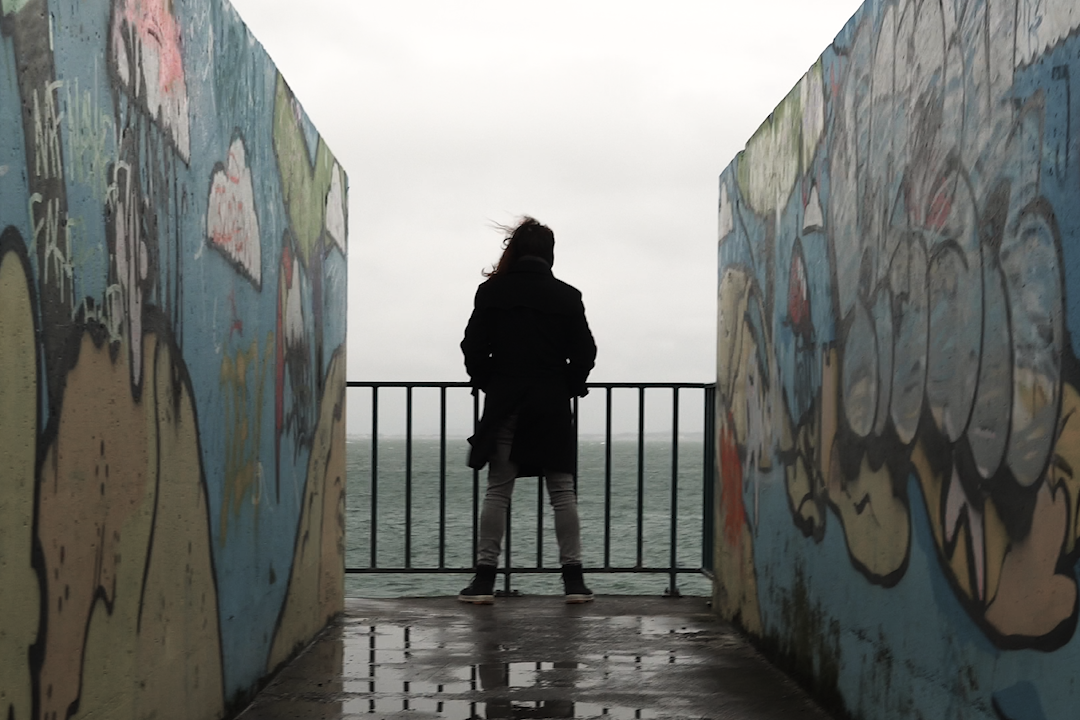
I’m home, and I’m sad. It’s been a little over a month, and usually by now I’d be someplace else. January last I was in a cold, quiet Cordoba. January before I was in Marseille; warm, hectic Marseille. Now I’m home. I’m writing against the familiar backdrop of a grey Sligo sky, and I’m sad. Not sad to be home, but sad at home. And it’s more than sadness; there’s some shame, disgust, and plenty of distress in there too. It’s been eating away at me for the past three weeks, a bad mood, a nagging annoyance that I can’t dismiss or forget. And I’ve been debating whether or not to write about it – I may get halfway through this and give up, but then I’ll be back at square one. So here it is, a purely self-serving piece of writing that I won’t be offended should you wish to skip – I promise your scheduled programming of carefree adventuring will recommence shortly. But I write about where I am and what I see, and since I find myself at home, home is what I’m writing about. And since this is something of a preamble, an advance warning that the following is likely to become overwhelming political. It’s not something I enjoy, and I wish I wasn’t feeling compelled to write this. But days of lethargic moping around the house in an angry internal discourse over whether or not to write this has left me with no other choice. It simply has to be done. Furthermore, I cannot say for certain how accessible or relevant this piece will be for readers outside of Ireland, so again, I won’t be offended if you chose to skip this one. OK, now that that’s said, let’s just get into it.
“I hear you’re a racist now, Father”. It’s iconic. Everybody knows it. The auld farmer in his wellies and flat-cap calling across the low stone wall to the least inept of the three local priests who, this episode, finds himself at the centre of a comic series of unfortunate misunderstandings with the inexplicably prominent Chinese community on the remote Craggy Island. It is, of course, Father Ted – the beloved UK/Irish sitcom from the late 90’s which follows the antics of three hapless priests banished to an island off the west coast of Ireland. Yet between all the hilarity and surrealism, from the “All-Priests five-a-side Over-75s Indoor Challenge Football Match” to the eternally entertaining “My Lovely Horse”, there are flashes of seething social-commentary. Some of which have only become more acute in the two decades since. It’s hardly subtle, but that’s why it’s so widely loved. As a people, we’re refreshingly ready to laugh at ourselves and our many peculiar idiosyncrasies, and seeing ourselves and our ways portrayed on screen is a continual source of good-natured self-appreciation. Following the international acclaim to An Cailín Ciúin and The Banshees of Inisherin, “Irishness” on film has made something of a breakthrough this past year – that is to say genuine Irishness, not the stomach churning put-on accents of Hollywood Ireland, no – this ‘Irishness’ is raw. It’s often exaggerated, usually carrying sub-themes of oppression and social dysfunction, and always offering moments of violently dark humour, but this is the film ‘Irishness’ we all know and love. Like a friend who knows you better than anyone and will tell you what you need to hear irrespective of your feelings; it’s a reflection of our naked selves that still lurks beneath the surface of our modern society, informing our customs and behaviours for better and, just as often, for worse.
“Should we all be racist now?”, the farmer continues. “What’s the official line the church is taking on this? Only, the farm takes up most of the day, and at night I just like a cuppa tea”.
Before Graham Linehan’s recent notoriety for anti-transgender activism, climate-change denial and vaccine scepticism, in the late 90’s he and co-writer Arthur Matthews were simply known as the masters of on-screen “Irishness”. They penned countless moments of iconic comedy, feeding off the typical Irish awkwardness around certain social situations, institutions, and taboos. At the top of the list in the late 90’s was, naturally, the Catholic Church; this was the time when the first fissures that would eventually shatter the Church’s iron grip on Irish society were beginning to be noticed, though not yet publicly acknowledged. But the writers unleased their merciless biros on other uncomfortable ‘Irishness’s’ too; corruption, domestic abuse, and of particular relevance to Irish current affairs, racism.
We have always prided ourselves on our universal welcoming and hospitality. We’ve made a brand of it, packaging our hundred-thousand welcomes into bundle holidays of Dublin and the ring of Kerry, printed mugs and quaint fridge magnets. We’ve exported our ‘ceol agus craic’ as iconic alcohols and franchised Irish bars the world over. It’s a successful model, and as tacky as it is, it’s harmless and in a way, kind of cute. Nobody believes the stereotypical tourist-snapshot of any country encompasses the depth of that country’s people and culture. Spain is not paella and flamenco. The Swiss aren’t all yodellers named Heidi. And naturally, there is a lot more to the land of a thousand welcomes than drinking and having a good time – but if that’s the stereotype we have to go with, well, I can live with that. And it’s not unfounded. Our culture demonstrates a significant relationship with alcohol, with the making and consumption of it, and all the rites and lore that that entails. And our custom is indeed to be welcoming – to friend and stranger alike. It is bred into us by value and by norm, even in my generation, though I suspect we are somewhat more reserved than our parents’ generation. Yet on the whole we remain, I like to believe, a people with our doors indiscriminately open. There are caveats of course. You’re expected to be polite and respectful, which I’m sure goes without saying anywhere, though in our case politeness is taken to the extreme and respect largely involves knowing the difference between Ireland and the UK. Historically, this can be a touchy subject, and perhaps in the past the one exception to the door being indiscriminately open was when an English person was on the doorstep. The door would still be open of course, just somewhat cautiously. Thankfully, this sentiment isn’t common these days; we’ve been able to move past that, at least on the surface. And on the surface at least, Ireland is not a racist country. This is not to say that there is no racism in the country, but it’s the harmless type, the joking type, the Father Ted putting a lampshade on his head and squinting his eyes for a laugh type – sure that’s not real racism, right?
Until recently, seeing a non-white face on an Irish street was a rare occurrence, especially outside of Dublin. Traditionally, religion and class provided the Irish social divisions, not ethnicity. White Catholic peasant Irish were the minority oppressed in their own land by the white Protestant landowning English. Tossed aside on the western fringe of Europe, never given the opportunity to jump on the colonising bandwagon, poor irrelevant Ireland idled away the centuries oblivious to the great clash of cultures brought about by empire and slavery. People only moved in one direction in Ireland – out. Not until the 1990’s was this reversed and significant immigration become a reality for white Irish who suddenly found themselves sharing their towns and streets with immigrant families, by and large from Asian nations, hence the Chinese community in the Father Ted episode. The 20th century saw Ireland playing catch-up: its solution – open its doors to the world. Immigrants were a novelty, as was the sudden prosperity that attracted them, and both were welcomed by a people with dollar signs shining in their eyes. Yet Irish people are no better than anyone else: no doubt these newcomers experienced cases overt harmful racism. But more prevalent, I imagine, is that more covert kind of racism. The racism that’s still lurking in the darker recesses of our society today. The jokes not made in front of strangers, but readily told in private. The enjoying of an Asian or Indian meal, after actively avoiding sharing a public space with an immigrant family. The watching of a film explicitly about racism, before avoiding the black taxi-driver on the way home from the cinema. These are examples of such ‘covert’ racism which I have experienced, or rather observed, by white Irish people. None of whom, I hurry to point out, would believe they are consciously and deliberately racist, and so it passes unacknowledged. And that’s just the tip of the iceberg, the racism visible to one who doesn’t actually experience it. Without malicious intent, it’s easy to dismiss, like Father Ted when he bemoans that he was only joking, and that he really isn’t a racist. It’s the ‘harmless’ racism, the racism of older generations who don’t quite realise what is and isn’t socially acceptable anymore. It’s the racism that we, as white Irish, don’t see. Or worse yet, excuse because it doesn’t seem condemnable enough to be worth making a fuss over. When we see the international news from the UK, and particularly from America, it’s easy to suppose that the institutional and violent manifestations of racism portrayed ‘over there’ are unparalleled here in our seemingly harmonious and relatively un-racist society. But we are only fooling ourselves. Racism is very real here. And no, Irish streets haven’t yet seen scenes of regular racially-motivated attacks and subsequent anti-racist protests – the point at which the normal nice people who’ve never been intentionally racist in their lives, but are blissfully oblivious to the covert racism all around them, look out of their window and finally realise there’s a serious problem. Racism in Ireland whilst doubtless being nothing new for those who experience it, has never been a big enough problem for the rest of us as to warrant a national debate about our own racist selves. But we need to have that debate. Urgently. Before we look out our window someday soon to the shameful sight of Irish people waving tricolours and brandishing placards, of Irish ‘politicians’ making anti-immigration speeches on the graves of freedom-fighters, of Irish people openly and brutally attacking innocent people. On that day, we are all guilty, and we should all be ashamed. I’m sad to say, that day is now.
When something is rotting, you don’t smell it immediately. It comes about subtly. You might catch a whiff of something one moment, but nothing the next. Only when the stench lingers, seeping into everything, omnipresent and revolting, do you realise that something is rotten. And something is surely rotting in our society. It’s been coming on for a few years, but now the heat is here and suddenly the smell is everywhere. It’s as if it came from nowhere. In truth, most of us have simply been unaware of its slow insidious spreading. And what’s that heat? Well, let’s just have a look outside.11,632 homeless, the hardest hit in this constantly worsening housing crises. Public hospitals in breach of human rights, a public healthcare system that is barely holding off utter collapse. Our government, our government, advising asylum seekers not to travel to Ireland midst our inability to provide any more emergency shelter. Initially, it was only online, WhatsApp groups and member-controlled Facebook pages. Then they took to the streets. Only a handful at first. But a dozen became two dozen. The flags came out. The chanting began. And then there were hundreds, all shouting the same thing: Ireland is full, Ireland for the Irish, Ireland first.
And so we find ourselves at the crossroads of crisis; difficult times that force us to decide the path we want to take as a nation. One is the path of steadfast democracy, of liberal values and humanity – the harder path. The other is the path of fear, of ignorance and division – the easy path. And some of us are already heading down that path, for this crossroads is our society’s first real challenge from within of the global far-right. Since the end of last year they have been protesting, those who have chosen the easy path. They march through the city centre, blocking roads and challenging Gardí. Outside Dublin the scenes are repeated, assisted by a core group of ‘activists’ willing to travel the country to organise and motivate local rallies. They have no unified name. On the streets they are predominantly young to middle-aged men, all white, some masked. Some are members of the National Party (founded in 2016 but yet to win a single seat in the Dáil), whereas many belong to unofficial fringe organisations or boast no political affiliation whatsoever. They are a lose umbrella coalition harbouring a variety of overlapping, though not necessarily unifying, alt-right motives and agendas, opposing the government and the opposition equally. Their target – immigrants. This is unprecedented here; it’s new ground for us. We’ve watched the rise of the far-right across Europe and America, our long history of centrist politics and superficially non-racist society lulling us into a false sense of security. But finally, we too have reached the crossroads. If we are truly the democratic liberal state we claim to be, the welcoming and humanity-loving people we believe ourselves to be, then our choice is obvious. We must take the harder path. It will be harder not for the opposition we face, but for the load we need to shed before we face them. Before we confront the discrimination and racism marching through our streets today, we must acknowledge all the yesterday’s we allowed such to pass unconfronted. We must purge ourselves of any false pretences; of any contradictions between our thoughts and our words. And words are what we must lead with. Words to make up for those not said before, words to form a brighter future, and right now, words to weaken and undermine the walls these people are trying to impose upon our society.
When I see the flags and placards, the hoodies and ski masks, I see a dangerous division in our society, a division that we as a small nation cannot afford to have. Exactly a century ago, such a division left us a nation broken and scarred. We know what follows a breakdown in dialogue. We know the consequences of walking out. And when I see flags and placards being met with flags and placards in a standoff outside the Shelbourne Hotel, I see people who a few months ago might have found themselves chatting in a pub or celebrating post-match now facing one another across an ideological void, and I wonder to myself; what would happen if I go over there and talk to one of them? Would they listen to me? Would I listen to them? And then I see you; you look approachable enough. You’ve just told a journalist “It’s not about race” whilst standing under a sign saying ‘No migrants. Get Them Out’. You seem like an intelligent person. I wonder what would happen if I go over to you and ask you what exactly it is then that you’re protesting.
‘It’s not about racism. There is no room for them,’ you’d probably say, before adding ‘Why should migrants skip Irish people on the housing list? I won’t accept it.’ I’ll ignore the obvious there – it’s a stressful day for everyone – and ask you ‘but why do you feel the need to assure people that your protest isn’t racist?’. To this you may respond that racism divides societies, incites fear and suspicion, motivates violence and discrimination, but ultimately, because racism is contrary to the values of a democratic state. And if all the political and civil arguments are merely superficial, surely reason enough to oppose racism is its fundamental corruption of our basic humanity. I would agree, to which I would add that the same basic humanity is what underpins the right of asylum, an ancient and near universally respected obligation to shelter those fleeing persecution and harm. If your humanity is as fundamental to your values, as it is in countering racism, then surely you are not suggesting actively denying these people that right? You may say ‘yes, I wish we could offer these people safety in this country, but our country is not equipped to do so right now.’ Indeed, that is what you say, only more to the point: ‘Ireland is full’. As I am accepting your denial of a racially motivated agenda, I suppose the other slogans of your movement – ‘Ireland first’ and ‘Ireland for the Irish’ – are not representative? Because if you are anti-racist and pro-humanitarian, as you claim, then surely there should be no preferential treatment in society on the basis of nationality? Surely in an un-racist democratic state, all people residing in that state are given equal opportunities. You may say, ‘yes, but these people aren’t citizens of that state, they aren’t resident here – they are asylum seekers.’ But doesn’t that increase our obligation to offer them safety here, on humanitarian grounds? Besides, Ireland isn’t full. Ireland has been empty since the 1850’s. If anything, we need a substantial population increase, not a mass deportation of foreign nationals. But I agree, we have a problem: our current housing and public infrastructure is strained to the max, and here we come to my major argument with your movement, assuming racism isn’t a factor as you claim.
Your concern over the nation’s ability to cope with this massive and sudden influx of people is legitimate. Your means and solution, however, are not. In the past twelve months 73,000 migrants have arrived in Ireland seeking international protection. International protection – this situation is not unique to Ireland. Europe has been dealing with the current period of mass migration for years, and as an EU member state, Ireland has an obligation to provide for a percentage of these people. By the way, countless thousands of these people never make it to the EU. They are held in non-EU neighbour states, in numbers and conditions most of us are completely unaware of. And of course, thousands more have died along the way. Last year, there were 7,500 asylum seekers in Ireland. The sudden increase should really not seem so sudden, but there are events ongoing in the world of which, again, most of us are unaware. Unaware, that is, until those fleeing from them turn up on our streets, and only then do we think to ask why. ‘The’ war, of course, has left scant room in the headlines for all those other little wars in places that seem further away, or somewhat less important, than Ukraine. Make no mistake, I am not quibbling the magnitude and tragedy of the Ukraine invasion – our news conveys misleadingly little of the scope and destruction of this war. But it should be no surprise that since February last, 54,000 Ukrainians have arrived in Ireland, alongside those fleeing from a multitude of other disaster areas. And yes, I agree that this is the last thing we needed. I’m sure it’s the last thing they needed too. But here we are, called upon to assert the humanitarian values we claim to uphold, even in the midst of a housing crisis; a crisis, it should be said, that was not caused by immigrants. 73,000 additional people in the country only exasperates the problem, yes – but the problem existed long before that, and it won’t be gone tomorrow even if we do deport every foreign national in the country. Ditto for the crisis in our public healthcare system. And we are right to be angry, and we are right to be protesting and pressuring the government into a major change of policy for the next twenty years. But we are wrong to be putting the blame on immigrants. A scapegoat only distracts from the core of the issue, weakening our ability as the people to bring about the necessary changes. Your movement has identified the problem, but not the cause. And your solution of mass deportation will not solve the problem. The only way to house a population is to house them – that means building housing. Ireland’s population has been gradually increasing for decades. Our successive governments should have been building housing accordingly. But there isn’t a problem until there’s a problem, at which time ‘should have’ ceases to matter. What matters now is the immediate need to keep the homeless out of the elements to limit further deaths. The homeless, which I remind you, comprise both Irish and immigrants alike. What matters now is building, and not just for now, but for the next twenty years. I’m aware this may sound a little too socialist for your liking, but these aren’t proposals for a leftist utopia, they are real solutions for an immediate problem. One shouldn’t have to suggest seizing derelict properties for conversion into temporary homeless and asylum shelters, but equally the government of a democratic state should never have to advise asylum seekers not to seek protection there on account of that state’s failings. As a humanitarian, as you claim you are, you should be appalled that anyone, Irish or otherwise, should endure the emergency accommodation our state is currently forced to provide. Your movement insinuates that migrants seeking international protection are greeted with a red carpet at Dublin airport and put up in five-star hotels – indeed some are, paid for by the state because there is literally nowhere else to house them overnight – and all this whilst the government actively conspires against the Irish people. But there are migrants arriving now whose first night in Ireland is spent in the airport arrivals hall, and their second night on the street. The luckier ones are ‘housed’ in makeshift dorms and temporary direct provision centres, only to wake up in the morning and find you outside holding a sign saying ‘get out’. How is this humanitarian? Or rather, how is this not racist? Where were you last year, or in 2019, or 2018, when homelessness was only marginally less than it is now? Where were you when the students of this country protested the lack of housing? Ireland is not full. But Ireland is underequipped to deal with these times, and has been for some time. It just took a wave of migrants for you to notice this, and it would appear that you are more concerned with kicking them out than solving the actual problem at hand.
You may say at this point, ‘I’m not against migrants in theory, but in this time of crisis Irish people should be looked after first’, at which point I would remind you that one cannot advocate for an equal society with exceptions. That defeats the purpose. Furthermore, I would reiterate that the time to fix our overburdened system was five years ago, but since we didn’t, and since a lot more of you suddenly care, then this is our opportunity to pressure for some real change, to drag Ireland kicking and screaming into the 21st century and set it up for the decades ahead. But now you may feel a little uncomfortable. You know the 21st century means globalisation and that alongside a growing native Irish population, there is a growing immigrant population too. Globalisation suddenly means more than kebabs and holidays to Morocco. It means actual Turks and Moroccans coming here, and not just for their holidays, no – they intend to stay. I suspect this is why you let the other slogans tag along, you know – ‘Ireland first’ and ‘Ireland for the Irish’. You’re worried your Irish culture and heritage might be overshadowed. And come to think of it, surely not all these migrants could be fleeing the war. That’s mostly in the east, isn’t it? And hang on, there are a lot of men here – ‘military age men’ at that. These can’t all be seeking international protection. No, there must be ‘economic migrants’ too, people who travel here in search of a better life. If that’s the case, maybe you feel less bound to reign in your humanitarian-conscious anit-migrant rhetoric and feel justified in prescribing a healthy dose of nationalism?
But there is something comically paradoxical about an Irish ‘nationalist’ against immigration. In fact, I think you may have the wrong name for yourself. Every nation has its own iteration of nationalism; what exactly that entails and the subsequent connotations of the term. Here in Ireland, nationalism has traditionally meant being in support of Irish sovereignty and the political independence that, on account of its relatively recent acquirement, still contributes significantly to our sense of national identity. By this understanding, I think few Irish people would deny being a ‘nationalist’, not that we feel the need to advertise such anymore – the republic is over seventy years old now, I think we’re safe. But claiming ‘Ireland for the Irish’ above all others is Irish nationalism? I don’t think so.
You see, there seems to be a pervasive sense of fear surrounding your movement. Fear of being ‘replaced’, fear of unfamiliar faces and customs on the street, fear of an ‘invasion’ – or a ‘plantation’ as you call it, I see what you did there – of ‘military age men’ to drive you from your homes. Calling this nationalism seems an insult to the original Irish nationalists who were anything but fearful. And summoning ghosts from the history books to fight your battles for you is something I vehemently oppose. I think it is misrepresentative and disrespectful, and whilst no one can be certain, I would imagine the same men and women who fought for an Ireland free of oppression and discrimination would be the last to endorse such remerging in Ireland today.
Of course, nationalism also encompasses support for the national language, arts and culture. But I can assure you, that isn’t going anywhere. Indeed, there is a notable absence of arts and culture in your movement. Or perhaps I should say, of people involved in the arts and culture. I imagine this is because people whose livelihoods and passions depend on such are generally not found opposing the arts and culture of others. But I can already see where this going. You are perhaps now formulating an argument along the lines of ‘yes, but you mean Irish art and culture as understood by you and your kind – middle-class and university educated – not the culture of us, the Irish working class. And we are the ones who must deal with these migrants you seem so fond of. You don’t take them in. They’re not settling in your neighbourhoods. It’s not your streets that are no longer safe at night’. Ah yes, I forgot you claim to represent the ‘Irish working class.’ Indeed, supporters of your movement, far less eloquent than your good self, have posted the following online comments to a counter anti-immigrant protest: “protestants”, “f**k off with your poetry and placards”, “and your [sic] all English”, “all of these people are apart [sic] of the university system”, “big farming and former British civil service families”, “middle/upper class clowns”, and my favourite, simply “not real Irish”.
I could go on. The threads deviate into anti-vaccine, anti-academia, anti-‘mainstream’ media, anti-everything discussions, providing hours of entertaining reading. But I am taking you seriously, and therefore will assume that you have nothing to do with that, so let us return to our discussion regarding migrants and class.
First of all, we are engaging in this discussion on the shared basis of being Irish, and that our socio-economic status, our education, and our religion do not alter that fact. I am as ‘real’ Irish as you are, whatever you think that entails, and we are discussing migration into the country with which we both identify, and the future of which we are both invested in. Furthermore, I would argue that people who weren’t born here, but who reside here in accordance with the state’s laws and democratic values, and who are just as invested in the nation’s wellbeing are as equally ‘Irish’ as you and I, though I suspect you will disagree with that – you’ve made your opinion of anyone who doesn’t fit your narrow criteria of ‘real Irish’ quite plain. On a sidenote, I question the logic behind readily accepting praise and support from like-minded Britions, including Nigel Farage, whilst insulting Irish counter-protestors with “English” and “protestant”. But more pressing, I turn to your stance on class, wealth, and the effects of migration across the socio-economic scale. No one disputes that those on the lower end of the socio-economic scale are the most vulnerable to the housing crisis. But you will find that the housing crisis is now so dire that everyone is being hit; by which I mean anyone who 1) doesn’t own a property in Dublin or 2) isn’t one of the wealthy minority able to afford the current rents. Furthermore, the housing crisis has so restricted working opportunities that the nation is once again emptying itself of its educated youth. And for tomorrows youth now seeking a university education, the barriers to entry are so high that many are choosing to study abroad, or simply bear the brunt. Such barriers to entry, as you know, are neither the cost nor availability of university courses – thankfully we still have that going for us – it’s the lack of affordable accommodation in our cities. It’s those who are neither on one end nor the other of the socio-economic scale who are squeezed the hardest. Families that are neither wealthy enough to keep their head above the inflation wave, nor struggling enough to qualify for our states limited social welfare: the ‘middle class’ you take for your enemy; the majority of the population; those who marched in their thousands last year in the cost-of-living protests, some of whom, no doubt, you recently ran into staging counter anti-immigration protests. Education is everything. Ireland has had ‘free’ 2nd and 3rd level education since 1967 and 1995 respectively. The state has long recognised education as an economic and social investment, though it hasn’t quite cracked the code to keeping its youth, once educated, on its shores. Nevertheless education is a priority, and has contributed significantly to the nations rapid growth and modernisation within the last thirty years. Education is the great equaliser, the great riser of all boats. Consequently, with each generation the old social delineators of working and middle class become ever more redundant in modern Irish society. And however much remains true of the discernible traditional upper-, middle-, and working-class neighbourhoods in Dublin, you will be hard pressed to identify such existing outside of the city.
Why is this important? For two reasons: firstly, it undermines the claim that your movement represents the ‘real working class of Ireland’; secondly and by extension, it undermines your claim that there is a middle-class conspiracy to ‘dump’ all of the incoming migrants in ‘working class’ areas. Allow me to elaborate.
Who is the working class of Ireland? Are they the bus drivers, the brick layers? I assume not the teachers and musicians. Maybe the nurses? Certainly not the hated Garda. Yet all these professions make close to the average Irish salary in 2022 (€44k pa), with 2nd level teachers being the lowest. Slightly above average and climbing are civil engineers, accountants, then hotel managers and software engineers, then we have the pharmacists, professors and architects. The higher we go the (generally) more specialised are the professions, and the fewer are the positions. Doctors are amongst the highest paid professions (av. €132k pa), but who would honestly want to be a doctor in Ireland right now? Here is a good time to point out that Ireland’s ‘free fees’ for 3rd level education ensures that even youth from low income families, and families on state support, can access university courses for medicine – this is not a class competition, but an individual ability competition (though naturally there are external advantages to boost a youth’s educational prospects {extra-curricular activities and private tutelage} the higher up a family is on the income scale). TD’s make an average of €105k pa, including Sinn Féin TD’s, long the champion of the working class, who are no longer required to accept only the average industrial wage upon election to the Dáil. They have moved with the times, having traded in the bombs and balaclavas to become the increasingly legitimate incarnation of modern Irish socialism. But I guess that’s why you oppose them. That’s why you brandish posters of Mary Lou’s face scrawled over with ‘TRAITOR’. But this should be all the evidence you need. The Irish working class, as you imagine that to be, doesn’t exist anymore. Access to education and prosperity unimaginable two generations ago has long since made your self-righteous Victorian notion of an oppressed ‘working class’ redundant. And your antiquated prejudice against a ‘middle-class’ elitist culture ring hollow in a society where a bricklayer earns the same as a classical violinist, and anyone who earns more than that is taxed at 40%. Today, Ireland is made up of the majority who have to work for a living, and the tiny minority who don’t. Thus, you will find Sinn Féin No.1 on the ballot sheets of people earning well over €44k. You will find Labour quietly on those earning less. And you will do doubt be exasperated to find the comforting FF/FG cycle still holding sway over vast tracts of the population, as eternal and harmonious as the motion of the heavens. But as we saw in 2020, the Irish electorate are ready to break that cycle and the hammer they have chosen, much to their own surprise, was Sinn Féin: republican, nationalist, and socialist. The anger of the Irish manifests itself in the left, in democratic socialism, as it has always done. The history of Irish independence is inseparable from the history of Irish socialism, and when such distinctions were still in existence it was a socialism shared by the working and middle class alike, united in the cause for self-determination. Fast forward a century to Ireland independent and wealthy, a society equal, educated, and prosperous. It’s not perfect of course, and at times like this the persistent shortcomings and inequality become particularly glaring. But it is an indisputable fact that the overwhelming majority of the Irish population are well off, and if you disagree, I urge you to consider some international relativity and perspective. And to reiterate a previous point, in times like these when the cracks in the neo-liberal façade appear, when inflation is creeping onto the Tesco receipts, the alternative being proposed in pubs and universities alike is the left – not the right. Your movement claims to represent a ‘class’ that doesn’t exist; imagined throngs of supporters for an ideology that is alien to the Irish electorate.
As for your claim that a supposed ‘middle-/upper-class elite’ is ‘dumping’ migrants in ‘working-class’ areas, I offer the following argument. You will be aware of Direct Provision; it has been the states method for housing and processing asylum seekers for over twenty years. Direct Provision centres are scattered across the country, many under private management and run on a for-profit basis, and rarely did we give much consideration to them. Yet inside, asylum seekers endured deplorable conditions. The system has been internationally condemned, and in 2021 the government announced its plan to end direction provision by 2024. Unfortunately, the past year has changed this. As a result of the influx of people entering the country, the state is hastily opening ‘temporary accommodation’ centres wherever possible. Everywhere¸ proposed sites are being objected to by locals, most prominently in recent days is the example of Lismore, a typical southern town of about 1500 inhabitants. There, hundreds have turned out to object to a derelict hotel being used as a temporary accommodation centre. And whilst the example of this quaint town disproves your claim of a secret agenda determining the state’s choice of locations for emergency shelters, it also serves to illustrate a major legitimate concern that these protesters have in common with your movement – safety.
As I am accepting your movement is not racist, your concerns must be similar to those raised by the Lismore protestors; safety concerns deriving from not knowing who these people are, regardless of their nationality. This is a fair point, particularly when coming from residents of a small town in which any blow-ins would usually endure a period of ‘sussing out’ before being fully accepted by the community. It is understandable therefore that a small community would be apprehensive to have a hundred new faces overnight, irrespective of what colour those faces are. And there is no real solution to this, other than figuratively ‘putting your money where your mouth is’. We who accept that we have a humanitarian obligation to help these people must ultimately be prepared to live with that reality face to face. Doing the right thing isn’t always easy, and it is primitively normal to be on your guard when a new tribe moves into the hunting ground. But we, recognising that cooperation is mutually beneficial in the long term, as conflict is mutually limitative, must be prepared to follow our humanity, not our fear, and make the first gesture of peaceful intent. This is what it comes down to: overcoming our fear. Not an easy task by any means. It takes a deliberate effort to overcome that fear; fear of the unfamiliar, the fear of the strange. And it is a task not made any easier by a media which has been polarised to suit your unconscious disposition; an algorithm that has learnt exactly what kind of headlines will trigger you to the point where a non-national committing a crime seems more unjust than the crime itself. It goes both ways of course. I am aware of the liberal bias in the news that is ‘recommended’ for me, and I make a point of fact-checking everything, especially the points I agree with. It is a constant battle against the blinkers sneakily being slipped around our eyes, a narrowness of vision that only makes you more scared of what you can’t see, what you don’t understand. Let’s be realistic, some of these migrants are going to commit crimes. Many already have – some of the worst and most tragic kind. I have seen a bit of the world and unfortunately, no matter where or when, it seems there is just some degree of evil in the world. I realise this is a weak link in my argument, and I admit I am too unversed in psychology to hypostasise as to why some people do what they do. What I can say however is that the language of ‘military-age men’ and ‘unvetted men’ only serves an agenda of fear. It would seem obvious to me that a significant portion of migrants are men between the ages of 18-64 with no police record in the country they are arriving in, that’s hardly a surprising demographic. And yet your movement asks “where are all the women?”, and in the case of Ukrainian men, “why aren’t you defending your country?”. But the women are here, only your media chooses not to show you, and as of the end of 2022 there were more than twice as many Ukrainian women in Ireland than Ukrainian men. And whilst it will come as no surprise to women reading this that migrant women face more difficulty during the migration process than men, it is young migrant men that take the headlines upon arrival. There is a curious phenomenon of men opposing migrants on the grounds of the threat they supposedly pose to women, yet the same men are curiously disinterested in the ongoing crisis of domestic abuse and femicides as a whole, not only when committed by immigrant men. A similar disinterest is observed regarding crimes against the LGBTQ+ community. I am reluctant to delve further into this topic with statistics and rationality due to its sensitivity, though I will include literature below which disproves the claims that migration increases crime, and that non-nationals in Ireland receive more lenient sentences than Irish nationals.
Fear of migrants bringing about an increase of crime in Irish society is something your movement preys upon. Once again, you are misdirecting attention, framing an issue of race from the broader and persistent issue of youth delinquency in urban areas – somewhat disingenuous for a movement that claims not to be racist. And I can see how it is easy for you to demonise black men hanging around DP centres. You’re busy whispering to scared women of what lies in wait around the corner and suggesting to frustrated men to see, see where your taxes are going. You like to paint this picture of the ‘economic migrant’ as a parasite feeding off the state, conveniently forgetting that international protection seekers are banned from working. In the absence of work, or any available activity, there is a persistent danger of anti-social activity occurring. This has always been a problem in Ireland, particularly regarding young men. And few things are as intimidating as a group of loitering young men, regardless of what language they’re speaking. I am reminded of the video that emerged last year of a group of Irish teens harassing a girl, causing her to fall under a train, or what the judge described as “16 year-olds messing”. The judge went on to give them lenient sentences on account of them having nothing else to do. I can’t help but notice a substantial body of similar teens and young men with ‘nothing to do’ marching in your protests. Were these the same men with ‘nothing to do’ who, over the time I’ve been writing this, evicted eight homeless migrants from their camp – an event your supporters claim has been fabricated? And for what? These homeless kept themselves to themselves, leaving in the morning to go to work, returning in the evening to eat and relax – just a normal day. Until you showed up. I admit, the details of the incident are sketchy. I don’t put it past The Irish Times sensationalising for the sake of headlines. But there was a camp there on Saturday night, by Sunday morning it was abandoned, and the reason the general population isn’t rising to your calls of ‘fake’ and ‘propaganda’ is because even if “Dublin migrant camp attacked by men with dogs, sticks and a baseball bat” isn’t exactly what you did, it’s the sort of thing we expect you would do – will do. For those of us who don’t support your movement, we see your parading, your aggressive chants and slogans, and we see one thing: fear. The kind of fear that is barely contained; the kind of fear that leads to violence. I hope you prove me wrong.
If your movement has any aspirations of legitimacy in the eyes of the general population, you will need to address the many paradoxes you present, namely rejecting to be racially motivated when all the actions of your supporters suggest otherwise. You will need to start offering clear and feasible solutions to the challenges the state faces outside the single issue of housing; ‘Out, out, out’ is not a clear and feasible solution. And you will need to rethink your rhetoric so as to appear less chauvinistic, less homophobic, and less xenophobic. But I guess you must be tired of all the ‘ic’s’ and ‘ist’s’ people call you. I guess that’s why you’ve loosely organised as the original Irish far-right, proudly adopting those many ‘ic’s’ and ‘ist’s’ as your policies. Political organisation is commendable after all, it demonstrates self-seriousness and demands acknowledgment. And you’ve certainly identified yourselves and made yourselves known to the rest of us, for that we thank you. Whether you wear the pin of the Irish Freedom Party (anti-EU), or the National Party (alt-right), rest assured you are no longer being ignored, and that is the first step towards political representation. You have identified your opponents as the centrist government, the opposition left, the traditional conservatives – anyone who doesn’t don’t share your thirst for outright discrimination against minorities. Ireland has never had much political representation from the ideological right; history and economic necessity formed a uniquely Irish iteration of nationalism incompatible with the agenda of the modern global right, so in that sense you are going bravely where no Irish has gone before. And although your ranks are growing – and for those of us like myself who fail to see the positives offered by far-right politics, that is a cause for concern – they grow but marginally. It is common knowledge that those who have the least to say shout the loudest, and for so few of you, you make a lot of noise. Yet do not think that we don’t take you seriously – we do. The threat of violence that lingers every time you protest has us all very much awake. And whilst stand-offs across Stevens Green are inevitable should you persist, I have not lost faith in the de-escalating potential of dialogue. But you do make it oh so difficult.
You see, conspiracy theorists don’t make good debating buddies. They are not known for their respect of logic or their receptiveness to reason. When your starting premise is the ‘great replacement theory’ how can one hope to have a political discussion about real problems and real solutions? It’s for this reason that I label the National Party, and perhaps by extension the rest of you, as ‘alt-right’ instead of right-wing or ultra-conservative; those labels are reserved for genuine political ideologies proposing genuine political policies. Ideologies and policies I am whole-heartedly opposed to, but ones that are self-contained, identifiable, and policy-driven. If I can see where you’re coming from, and what exactly you’re proposing, I can debate with you. And though neither of us will change our views, in a democracy there is such a thing as constructive opposition. But when you’re constantly changing tack from the ‘great replacement’ to ‘LGBT grooming’, it becomes apparent that you yourself don’t know what you stand for, nor do you have a clear image of what exactly you want. It is impossible to build without first laying a foundation, and it is impossible to start building when all you’re interested in is tearing down. This is the alt-right; undefinable and chaotic, you know it when you see it but if an alien landed on Earth and asked you to summarise it, you wouldn’t know where to begin. At best you might manage a description of their general stance on just about everything: oppose, oppose, oppose. Or their message: hate, hate, hate. And this is what you must distance yourself from should you ever hope to be more than an embarrassing annoyance for this country. Alas, by the looks of it, you seem to have chosen your camp. And whilst I am sad to return home after two years, after months dealing with Spain’s growing far right – what’s really depressing is that not only do I find you here too, but you didn’t even have the decency to be the normal right, no – you went straight for the crazy. The rise of the Irish alt-right: how saints and scholars finally lost their minds.
At this point, I confess, I’m reaching the end of my patience for pretending. I’ll just come out with it: I don’t believe you’re not racist. I’ve been all over your party pages, your tweets and your Facebook groups – I can’t imagine what goes on in your Telegram chats. You are all that people say you are and more, going above and beyond the mere political right, infinitely removed from traditional conservatism; you are something new altogether. Something we didn’t know we had within us. You are the worst of us. And yet you are of us, and therefore we must shoulder the responsibility for your conception, and by extension, accept the duty of ensuring you that you never, ever, be mistaken for representing the values of the Irish people. The same values that necessitated the existence of the Irish state, yet which go beyond mere tenets of political philosophy; values which find their birth in a psyche formed by generations of struggle, of poverty and hunger, of final good-byes on the docks, and in a resolution that the only life worth living is a life free from oppression, free from struggle, free and equal amongst fellow humans. Those are the values at the core of the Irish people, and as far as I’m concerned, anyone who shares in them can count themselves amongst the Irish people. Our ancestors knew what oppression was, they knew what emigration meant. You may have forgotten that, but most of us haven’t. And that’s why everywhere you march with your placards and flags, you find us waiting with ours, because even in this time of crisis we’re not willing to compromise our humanity, because we’re not insecure in our ability to come through – because we’re not scared.
Personally I’m more inclined to dialogue than stand-offs outside the Shelbourne Hotel. I still believe in words before action, though when you decide you’ve had enough talk, as I know you will, I know where I’ll be standing. I’ve tried to meet you on your terms and take you seriously, tried to see your arguments as anything other than fear and racism, but you don’t make it easy. At this point you’ll probably call me a cultural Marxist and I sigh; you’ve got me, I admit it – I concede my case and capitulate to my rhetorical better.
Sources informing this article
https://www.irishexaminer.com/news/arid-41028332.html
https://www.tandfonline.com/doi/full/10.1080/1331677X.2022.2094437
https://www.drugsandalcohol.ie/29586
Hundreds in Lismore attend protest over plans to house asylum seekers in hotel
https://waterford-news.ie/2023/01/30/lismore-dp-centre/embed/#?secret=JQtKWz9hpG#?secret=7YJuCvIwVC
https://www.irishexaminer.com/news/munster/arid-41050919.html
https://www.irishexaminer.com/opinion/columnists/arid-41052275.html
https://www.irishexaminer.com/news/arid-41059127.html
https://www.irishexaminer.com/news/arid-41059481.html
https://www.rte.ie/news/ireland/2023/0129/1352534-direct-provision-protest
https://www.tandfonline.com/doi/pdf/10.1080/00750770802076943
Leave a Reply